



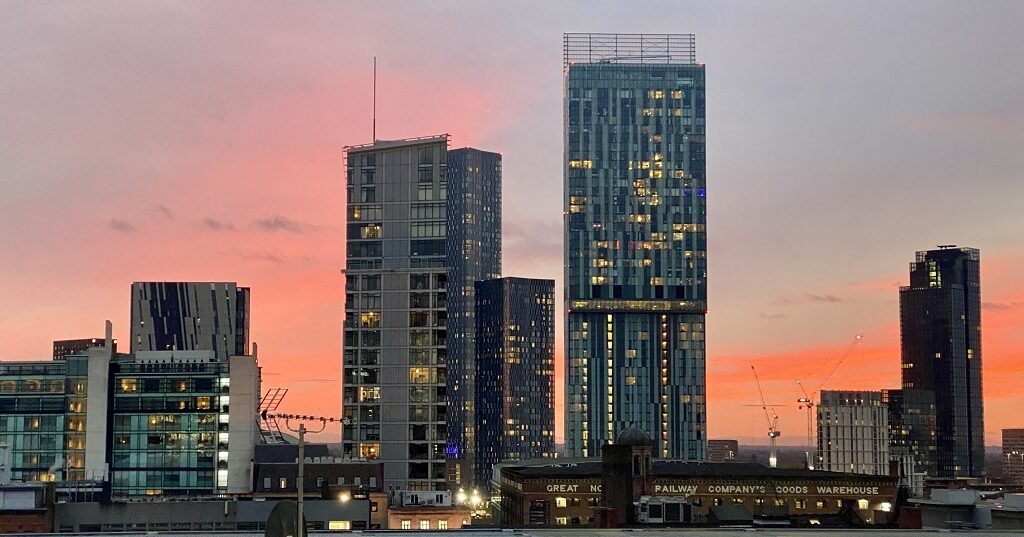
Manchester rents are 20% more expensive than last year
Research from JLL shows that Manchester rents have surged this past year, surpassing the national average rental growth of 14%.
JLL’s Big Six Residential Development Report looks at how prices and rents have changed in Birmingham, Bristol, Edinburgh, Glasgow, Leeds, and Manchester.
Manchester, with its 19.6% annual rental growth has the highest rent increases among the Big Six. It is followed in this closely by Edinburgh, which has seen rents grow by 18%, and Birmingham, which reports a 17.9% increase.
Your average Manchester one-bedroom home is £1,225 a month, according to JLL. A two-bedroom home is £1,600 a month and a three-bedroom one is £2,200 a month.
Meanwhile, home prices in Manchester have an annual growth of 4.9%. The average price for a one-bedroom home is £223,500. A two-bedroom residence is £309,000 and a three-bedroom one is £374,000.
The increase in prices is credited towards a growing population and shrinking supply. Manchester has increased its population by 9.7% over the past decade, according to JLL. People are lured to the city due to increasing employment opportunities – those figures JLL reports as increasing by 28%.
“Manchester continues to attract a significant amount of inward investment, students and young professionals, looking to make the city their home,” said JLL’s Steve Hogg, the head of UK residential regions and North West.
“It’s unsurprising given the employment and education opportunities that have been created here over the last decade,” Hogg continued.
“That said, although the city continues to build homes at a quick pace, demand is still outstripping supply, so there is work to be done to unlock land that is ripe for development and create houses for the people that need them, and quickly.”
- How does Manchester compare to Leeds? Find out.
Louise Emmott, managing director at residential agency Kingsdene, noted that the rental growth rate of three-bedroom homes was increasing faster than one- and two-bedroom homes – 33% compared to 25% and 14%, respectively.
“This is the largest increase across any of the markets reported and showcases the growing demand for families looking to stay in the city centre for longer,” Emmott said.
It is not all good news, though, Emmott said.
“At the same time, the end of the Help-to-Buy scheme and increasing mortgage rates are pushing up rental renewals as renters look to stay put while they save more money or wait for rates to come down,” she continued.
“All of this combined is causing stagnation in the market which needs to be addressed if we are to keep up with the pace of migration.”
The lack of supply is not just a Manchester issue. JLL director of UK residential research Marcus Dixon saw it reflected in all of the Big Six cities.
“What has become clear through our analysis is that neither the sales nor rental market is currently able to keep up with demand,” Dixon said.
“With fewer landlords entering the market, and the rate of new builds slowing, government intervention is needed to restimulate the market and ensure that there are enough homes for the people that need them,” he continued. “By creating opportunities for people to live and work in our regional cities, it will stimulate further inward investment and contribute to the success of our cities long term.”
Learn more about the residential market in the North West. Book your Place RESI ticket.

